Fashion finder app · Bits of Good Club BOOTCAMP
Glove
Personalized Clothing Shopping Experience Designed Around How People Actually Discover and Buy Clothes


Role
UX Researcher
Product Designer
Team
Self
Saanvi Tatipalli
Timeline
4 months
Aug 2025 – Nov 2025
Tools and skills
Figma
Product Design
Protyping
OVERVIEW
Glove is a case study from the Bits of Good Bootcamp at Georgia Tech where selected students are partnered up to work on a problem of their choice.
🙊PROBLEM
In the initial stages of research about online shopping, we discovered that there is a gap between companies and consumers, where sizing accuracy is a recurring problem and brands go undiscovered because consumers just stick to what they're used to.
🐵SOLUTION
An all-in-one shopping app that prioritizes size matching, review comparisons, and social media inspiration with simple interactions that ease the worries of consumers when it comes to online clothing shopping.
PROCESS & RESEARCH
USER RESEARCH
We began by interviewing 5 college students about their clothing-shopping habits. We wanted to understand:
1. What features people use most/would like in a fashion shopping/outfit app
2. What people are most frustrated with with current shopping websites and apps
3. What people look for when online shopping/how they shop
So we conducted interviews with 5 college students to gain insight of their online shopping habits and preferences.
affinity wall

FINDINGS
1
Sizing varies across brands
Users often rely on reviews because size charts aren't reliable.
2
Brand familiarity builds trust
Users hesitate to purchase from unfamiliar brands.
3
Social media drives discovery
Clothing discovery often happens before users actively begin shopping.
COMPETITIVE ANALYSIS
We conducted research of existing popular shopping websites, apps, and extensions that our user demographic utilizes.

RESEARCH VISUALIZATION
STAKEHOLDER ANALYSIS
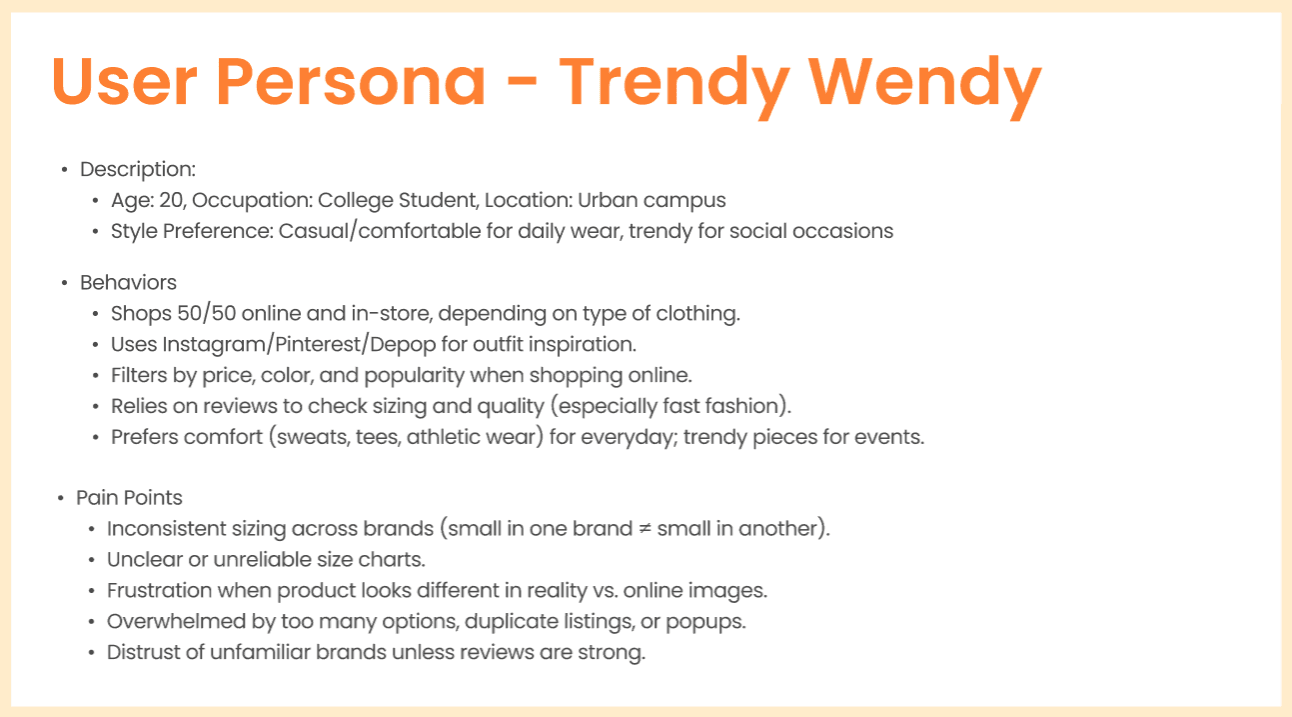
To further understand our demographic, we created a user persona that reflects the insights we collected during research. We used this persona for a cognitive walkthrough of scenarios.
STORYBOARD
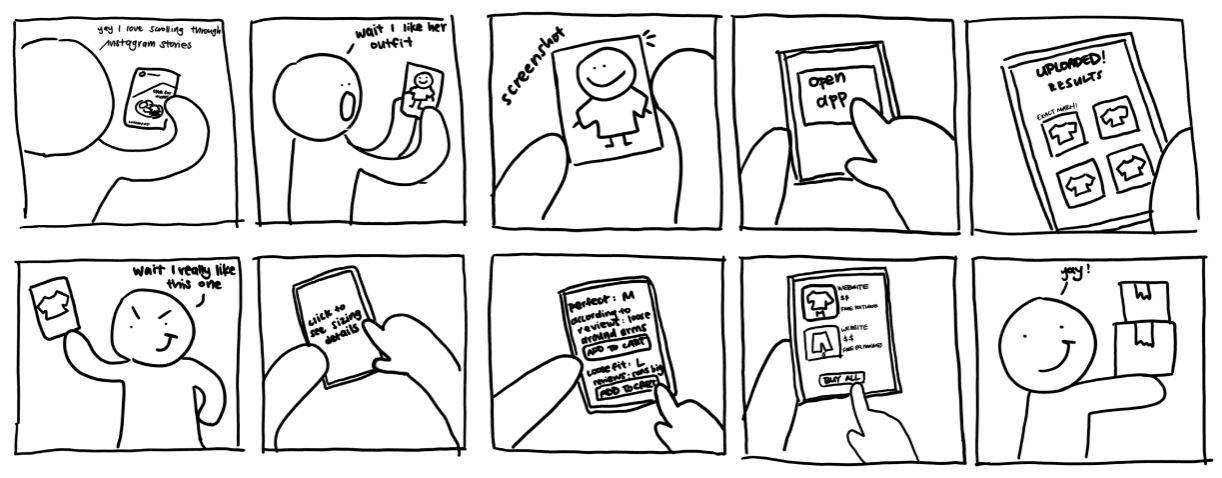
We then made test scenarios to illustrate possible user paths.
PROTOTYPING
LO-FI WIREFRAMES
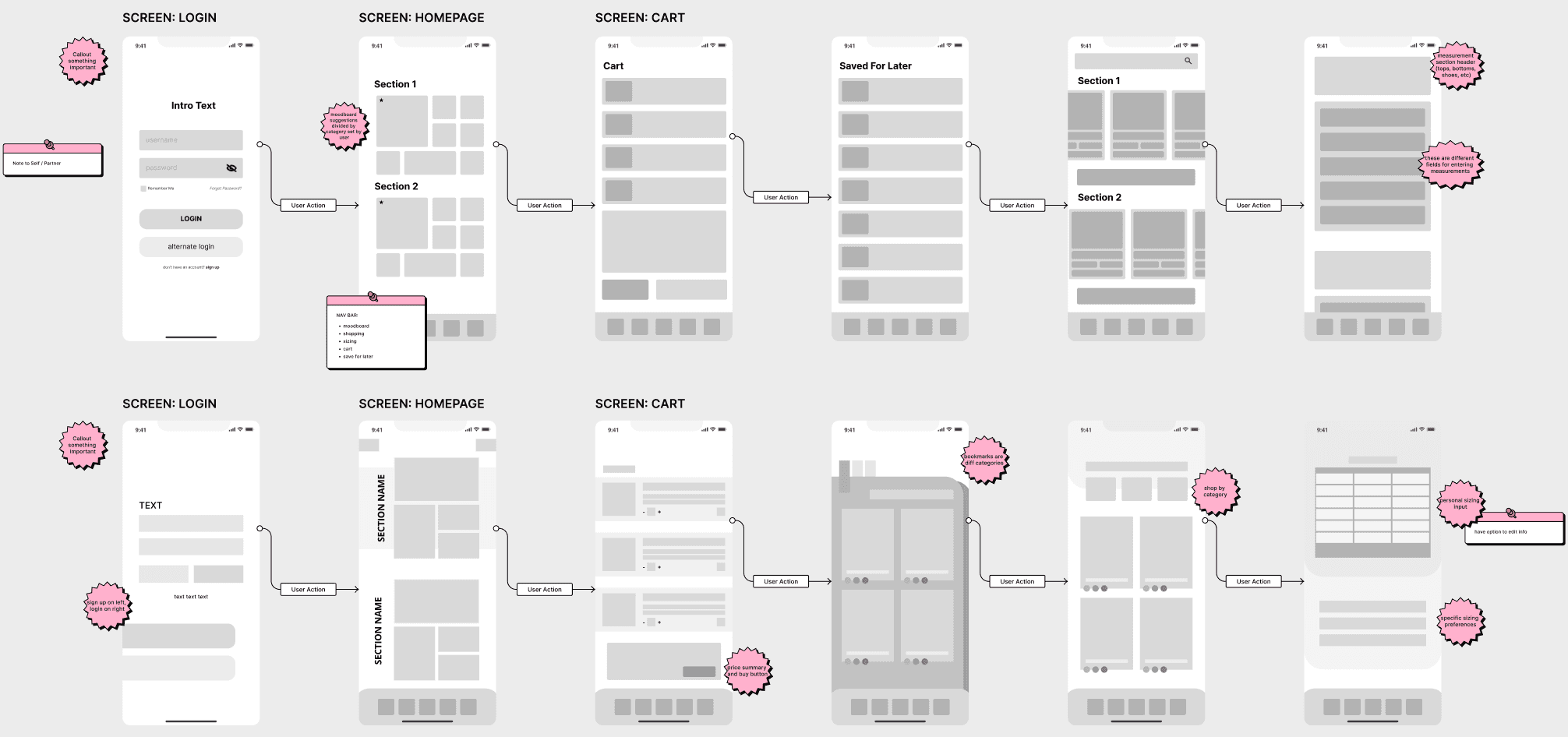
We translated the experience into low-fidelity wireframes to explore the structure and flow before focusing on visual design.
WIREFRAME ITERATIONS

HOME SCREEN
After user testing, we revised the main screen for simplicity and clarity.

SAVED ITEMS SCREEN
Saved item information blocks were edited based on information hierarchy to make viewing easier.
Final UI
HOME SCREEN
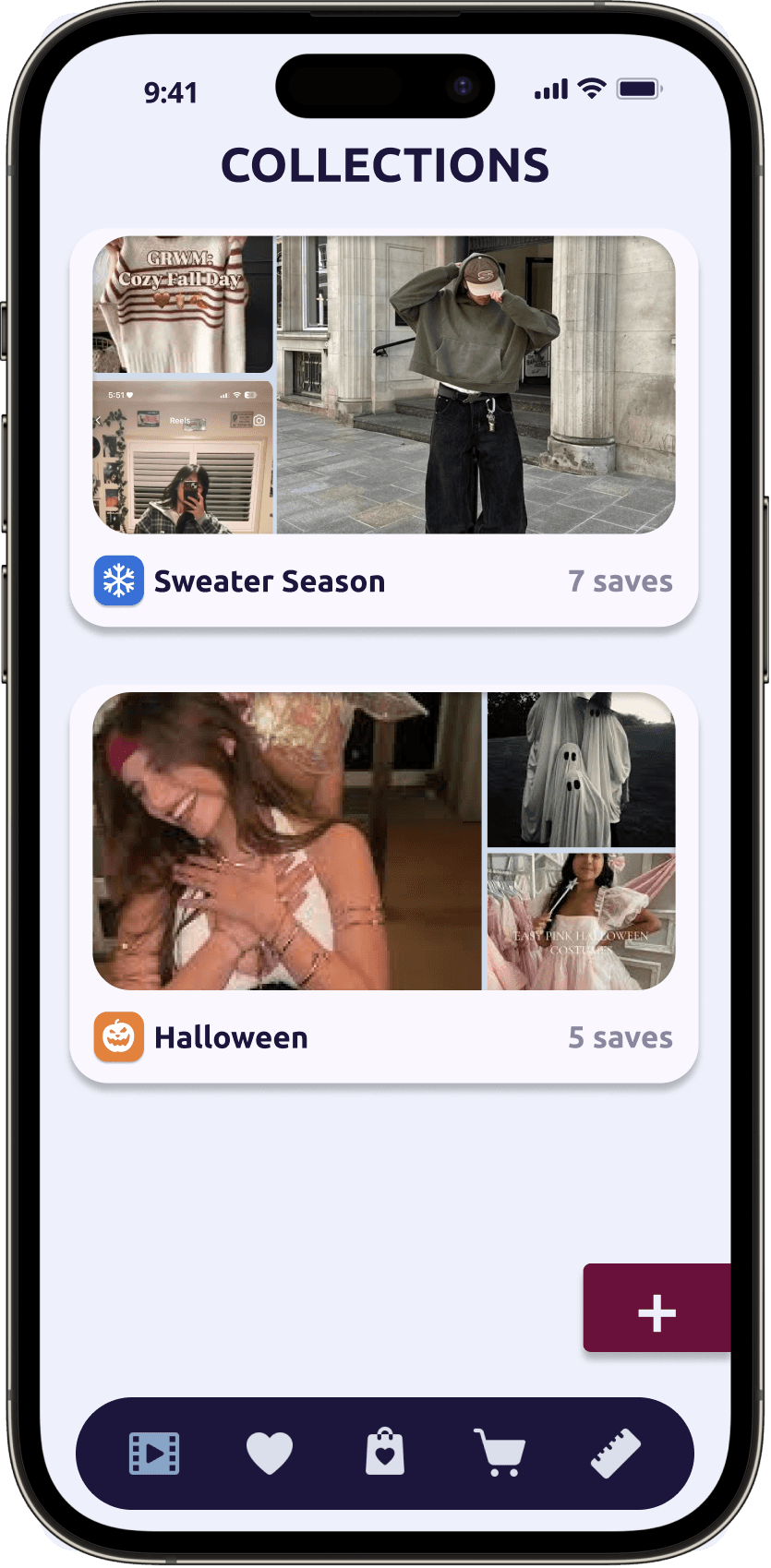
Save content from the internet into categories of your choice.
CLOTHING MATCH
Matches based on an uploaded image.

RECOMMEDATIONS
Recommendations from various brands based on saved categories.
ITEM INFORMATION
Item page with a focus on size finding and relevant reviews.

SMART REVIEWS
Reviews with smart searching, utilizing keywords and AI to crowdsource opinions.

SIZE & FIT PREFERENCES
Customize size and fit preferences for better recommendations.
💭 Reflection
I learned a lot about the importance of understanding the reasoning behind a user's actions instead of making assumptions about what they need, and how research can uncover patterns that aren't immediately obvious and how those insights can guide more intentional design decisions.
I learned more about:
User research and testing
Iterating ideas with feedback
Teamwork